
What Is a Mid-Rail on Shutters?
15th August 2025
3 min read
15th August 2025
3 min read
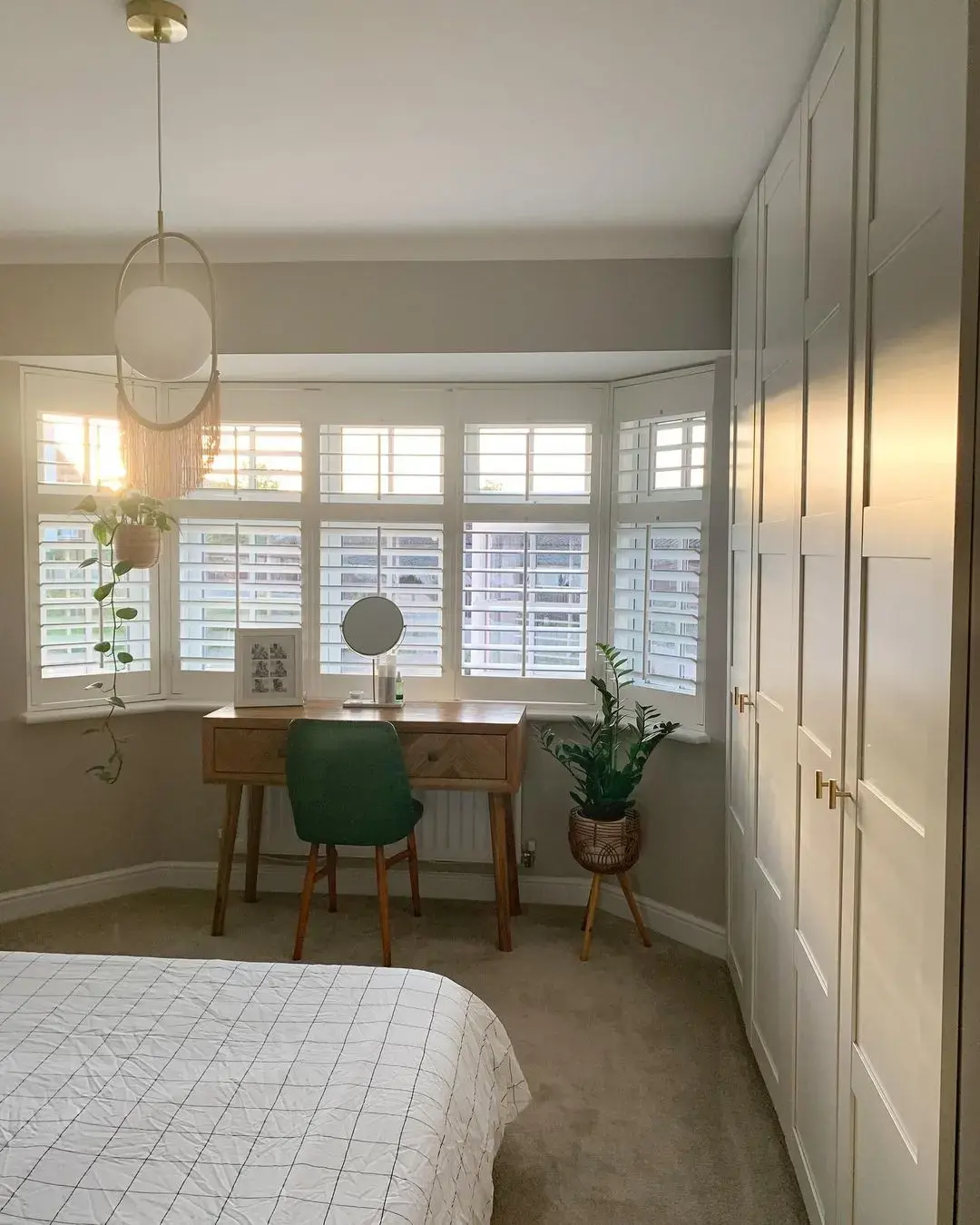
When designing your DIY shutters, you will likely come across the term "mid-rail." If you are new to the world of plantation shutters, it can be confusing to know whether you need one, where it should go, and what purpose it actually serves.
Put simply, a mid-rail is a fixed horizontal bar that runs across a shutter panel. While it might seem like a small detail, it plays a massive role in both the strength of your shutters and how you use them day-to-day.
There are two primary reasons why a mid-rail is added to a shutter design: structural integrity and enhanced light control.
For windows over a certain height (usually around 1500mm), a mid-rail is often required. Shutters that are made from real hardwood, very tall panels can be heavy. A mid-rail acts as a "brace," preventing the long vertical stiles from bowing and ensuring the entire panel remains perfectly square and stable for years to come.
This is the feature most homeowners love. A mid-rail splits the shutter into two separate sections. This means you can tilt the bottom slats closed for total privacy from the street, while leaving the top slats open to flood your room with natural light. Without a mid-rail, all the slats in a full-height panel move together.
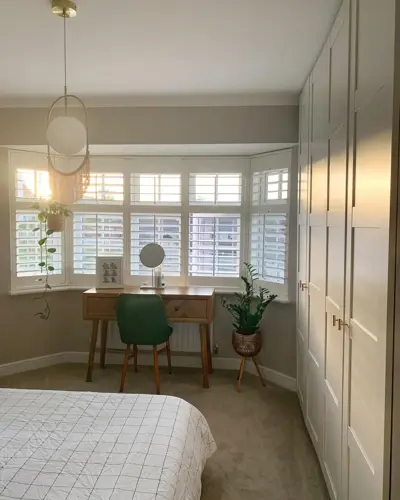
Image Credit: @new_build_forever_home 2
The beauty of DIY shutters is that you choose exactly where your mid-rail sits. Most people choose to align the mid-rail with a natural break in their window, such as the horizontal "transom" bar on a uPVC window or the meeting rail of a sash window.
By mirroring the lines of your window architecture, the mid-rail becomes almost invisible from the outside, maintaining a clean and professional look. If your window doesn't have a natural break, you can simply place it at a height that blocks the view from passers-by while allowing light in above eye level.
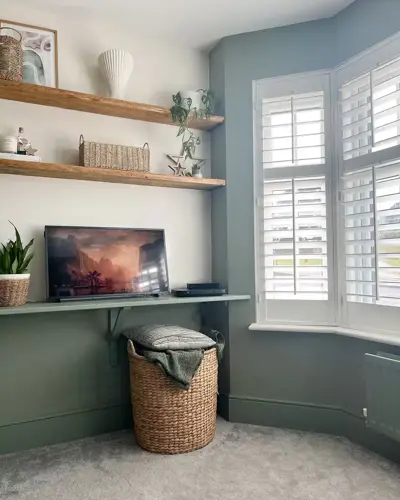
Image credit: @new_build_forever_home
If you have shorter windows, a mid-rail might not be necessary. On a small window, adding a horizontal bar can make the area look "busy" and block out a portion of the glass that you’d rather keep clear.
If you want independent control on a shorter window without a solid bar, you might consider a "hidden split" in the tilt rod instead. However, for most standard and large windows, the mid-rail remains the most popular and durable choice.
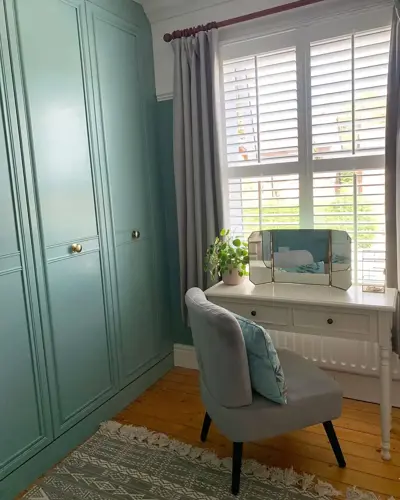
image credit: @campbell_and_cox_home